TRUE AND FALSE ABOUT TEA
It is well known that after water, tea is the most consumed beverage in the world. There isn't a corner of the world where people don't drink at least one cup of tea a day. Originating in China, it has been grown and drunk for more than 2,000 years. Today, its health benefits are scientifically recognised.
As with any kind of treatment, herbal or otherwise, tea is also attributed qualities and flaws that may not even be true. Indeed, some teas have even created real legends.
Let's see what's fake and what's not.
- It's not good to drink it hot
FALS
We can drink it as hot as we can bear, as it has a vasodilating effect on our capillaries, thanks to the flavonoids it contains. A quality that benefits us in both summer and winter. By dilating capillary blood vessels, the sensation of warmth in cold weather will be more intense. Conversely, in hot weather, vasodilation of the capillaries has a cooling effect, as it increases heat loss. So it is recommended to drink hot and during hot weather.
- People with anaemia should limit tea consumption
TRUE
The polyphenols contained in tea chemically 'bind' to iron from food and prevent it from being absorbed. Women, but especially children, should avoid drinking tea before or immediately after a meal, especially if their daily diet is not high enough in meat and meat products (the body's main source of iron). If tea usually accompanies your meals, it would be good to consume foods rich in vitamin C at the same time (for example, drinking orange juice or lemonade made from fresh lemon), which does not allow polyphenols to hinder iron absorption.
- Gives us cavity protection
TRUE
The tea starts working for you from the first sip. The substances it contains, especially polyphenols, prevent the bacteria in your mouth from producing acids that attack your tooth enamel. To relieve a toothache, the Chinese advise us to chew a few green tea leaves, and in the case of canker sores, to speed healing and relieve pain, apply a moistened black tea bag to the affected area.
- Can give insomnia
TRUE
If you consume it in large quantities, you may have trouble sleeping. Why? Tea contains 2 stimulants, caffeine and theophylline, which are less harmful than those in coffee. Depending on its variety, a cup of tea provides 2-3 times less caffeine than a cup of coffee. However, there is a problem. The caffeine in coffee is released quickly and acts briefly, whereas the caffeine in tea diffuses into the body over a longer time and therefore has a prolonged effect. Consumed in moderation, however, it boosts alertness and increases the brain's ability to analyse the information it receives daily. In conclusion, if you don't want to stay up all night don't drink more than 5-6 cups (cups, not mugs) of tea a day.
- No milk or lemon is healthier
FALS
The polyphenols in tea bind to iron from food (especially meat) and prevent its absorption. So it's best to drink tea between meals to avoid iron deficiency. In addition, it is advisable to add milk or lemon to the tea - these saturate the iron ions, which will be better absorbed this way.
- Prevents cardiovascular diseases
TRUE
Tea increases your daily intake of antioxidants, which help maintain good health. Both green and black tea contain flavonoids and polyphenols, substances with antioxidant effects, which prevent the action of free radicals, the "enemies" that age us before our time and are associated with cardiovascular disease, cataracts and cancer.
2 cups of tea contain as many anti-oxidants as 7 glasses of orange juice or 20 glasses of apple juice. 3-5 cups of tea a day have been shown to combat hypertension and normalise cholesterol levels, the main risk factors for cardiovascular disease. Regularly drinking just one cup of tea a day can almost halve the risk of a heart attack, and in people over 50 this healthy habit reduces the risk of stroke by 70%.
Preparation rules
The usual ways of preparing tea are infusion and decoction.
For infusion generally use the delicate parts - leaves, flowers, fruits and seeds - while decoction is used to extract substances from the "hard" parts - roots, bark.
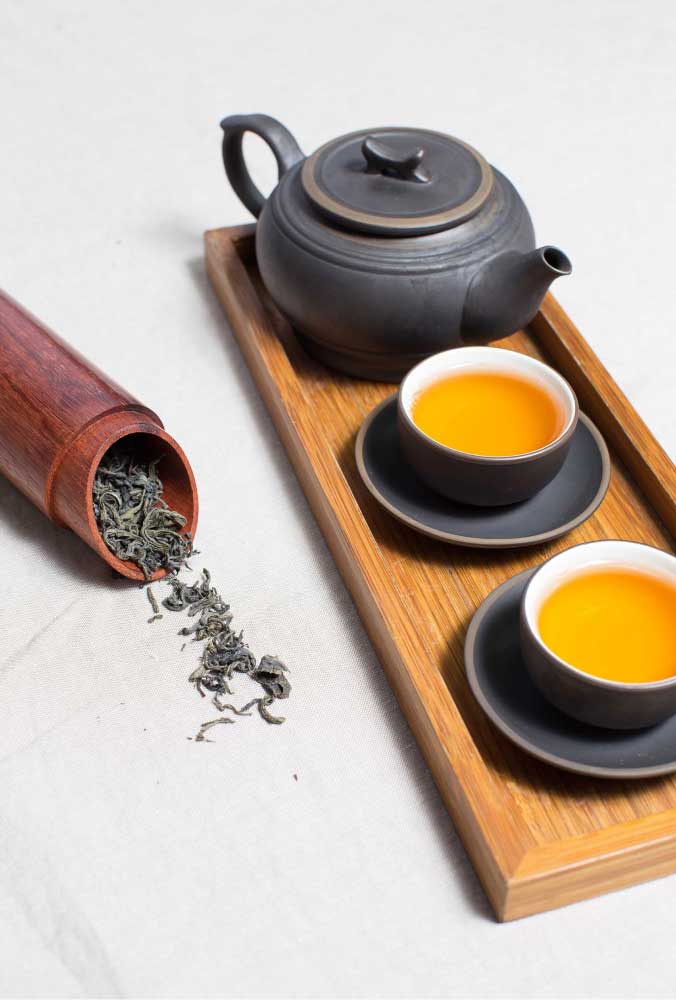
* Put the leaves or the sachet with the herb in a glass or ceramic teapot and not in metal pots, which can give the tea a strange taste. In general, 1-2 teaspoons of dried herb or 2-4 teaspoons of fresh herb are used for a cup of tea. Read the brewing recommendations carefully.
* Pour hot but carefully not boiling water (70-80°C) over the plant. It's best to use spring water or still mineral water - sink water contains chlorine and other chemicals.
* Cover the pot tightly and leave to infuse for 3-4 minutes. It will retain its colour, aroma and taste.
*Stretch it carefully. It's not good to let it steep too long, as too much tannin is released and the tea will be bitter.